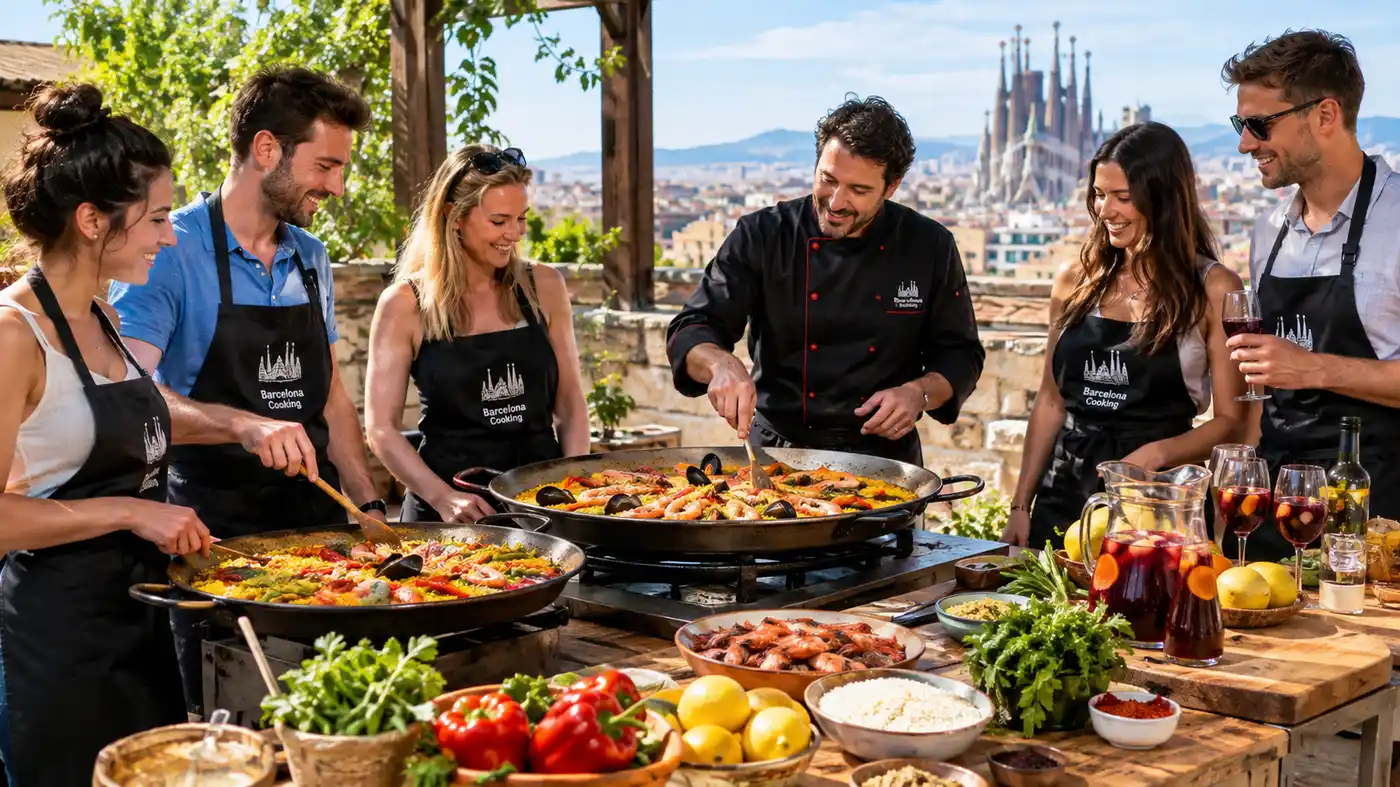
Paella and Sangria Cooking Classes in Barcelona
My first night in the Gothic Quarter ten years ago ended with a burnt tongue and purple teeth. A tourist trap near Plaça Reial had sold me yellow rice that tasted like salty dishwater and a liter pitcher of cheap red wine drowned in Fanta. It took a while to realize how badly I had been fleeced, but that misadventure forced me to seek out the real thing. Booking a proper paella and sangria cooking class barcelona locals actually vouch for changes everything about how you taste this city.
Standing over a wide steel pan in an airy kitchen while dicing fresh squid makes you appreciate the patience involved in Catalan cooking. You learn that sangria is not just fruit thrown into rotgut table wine, and paella is never stirred like a risotto. This guide covers what happens inside these kitchens, how to pick between a home setting and a specialized studio, and what you actually gain beyond a full stomach.
Book your paella cooking class barcelona experience:
What Happens Inside an Interactive Spanish Cooking Experience in Barcelona
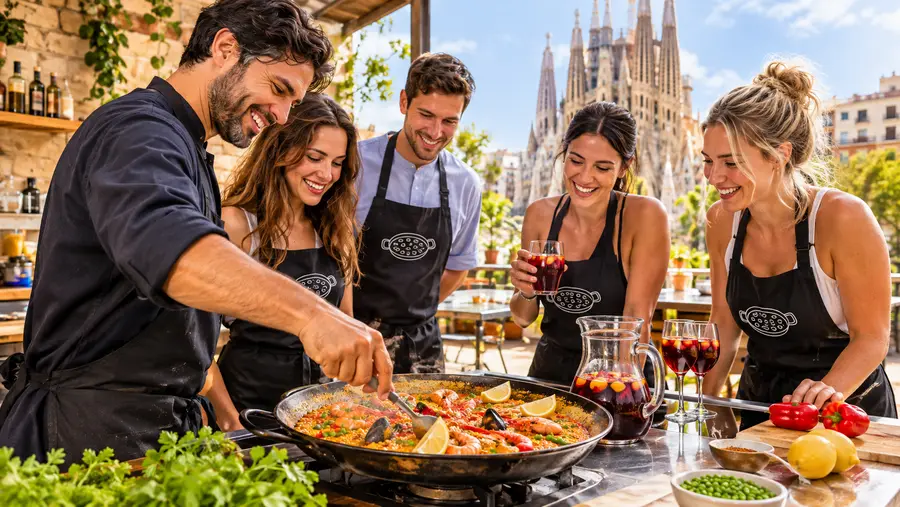
The doors usually open around 10:30 in the morning or 6:00 in the evening. You walk in, hang up your jacket, and someone hands you a drink almost immediately. Some spots begin with a vermouth or a glass of chilled cava from Penedès. It breaks the ice among eight or ten strangers who all look slightly terrified of holding an eight-inch chef knife before noon.
Prep work is hands-on. Do not expect to sit in stadium seating watching an instructor perform on a raised stage like a daytime TV host. You chop onions until your eyes water. You peel prawns, slice red peppers into thin ribbons, and scrape tomato flesh against metal box graters to build the sofrito. A solid workshop functions as an interactive spanish cooking experience in barcelona where your fingers actually smell like garlic and sea salt by the end of the first hour.
Pro tip: Wear flat shoes with rubber soles and skip light-colored clothing. Saffron stains like printer toner, and oil pops off those wide pans no matter how careful you are.
While the rice base simmers, your instructor will usually steer everyone toward making tapas. You might blister Padrón peppers in hot olive oil or rub toasted bread with garlic cloves and raw tomato halves. If you want more variety on the side, some people seek out the best tapas cooking class in barcelona to master tortilla española and garlic prawns alongside their rice dishes. It keeps everyone busy while the broth works its way into the grains.
The Sangria Mystery: Red, White, and Cava Variations
Most tourists drink terrible sangria. Bars across Las Ramblas mix sugary citrus syrup with bulk wine, drop in three limp apple slices, charge 18 euros, and call it a day. In class, the instructor will correct this myth within ten minutes.
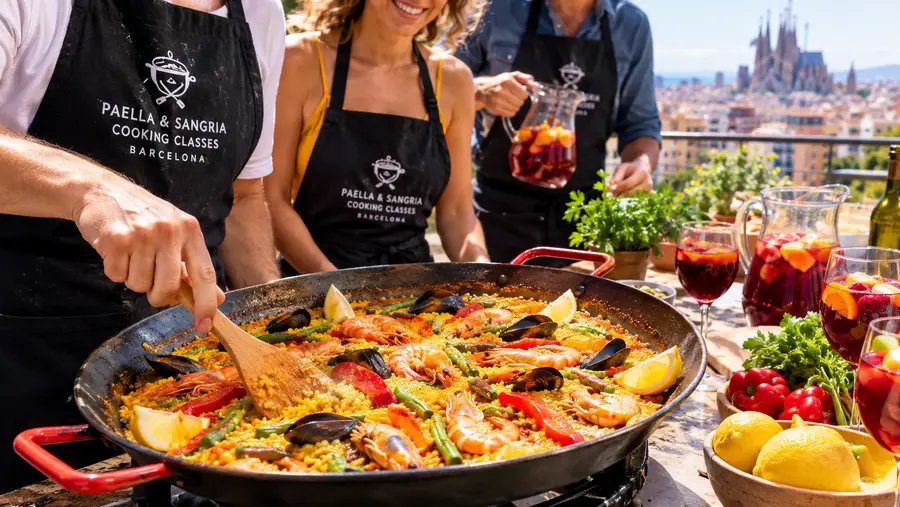
Real sangria needs maceration time, balanced spirits, and decent wine. You learn to balance dry Spanish red with a dash of triple sec or Spanish brandy, fresh orange juice, and cinnamon bark. The fruit needs to sit in the liquor to release its oils into the mix. Some workshops pivot toward sangria de cava, which uses dry sparkling wine, peaches, and a splash of gin. Honestly, cava sangria fits the sticky summer heat of Catalonia much better than heavy red blends.
Here are the core rules most local cooks drum into you:
- The base wine: choose an un-oaked, fruit-forward Garnacha or Tempranillo that tastes decent on its own.
- The sugar balance: dissolve raw sugar in warm citrus juice beforehand so grains do not sink to the bottom.
- The fruit maceration: cut firm fruit like crisp green apples and oranges thin, letting them soak for at least 35 minutes.
- The carbonation: add club soda or sparkling mineral water right before serving, never hours ahead.
You drink what you mix, so pacing is wise. Three glasses of well-made sangria sneak up fast when the kitchen heats up from four gas burners roaring simultaneously.
Choosing Your Setup: Studio, Market, or Chef School
Barcelona offers several distinct formats for these sessions. Some travelers prefer wandering through stalls with a chef before turning on a burner. If you want that market component, pairing your morning with a Barcelona paella cooking class with Boqueria market visit gives you context on where the seafood lands every morning at dawn.
Others prefer diving straight into serious technique. Enrolling in a formal barcelona paella sangria cooking class chef school provides professional stainless counters, induction units, and precise heat controls. These environments focus deeply on kitchen craft rather than socializing, which appeals to home cooks who want repeatable results back home. For an overview of institutions across town, read through our guide to cooking classes and culinary schools in Barcelona.
Note: Boqueria tours fill up fast on weekends, making the market aisles nearly impassable around 11:00 AM. Book weekday mornings if you want space to hear your chef speak.
Here is how typical formats compare across the city:
| Class Format | Average Duration | Typical Group Size | Price Range (per person) |
|---|---|---|---|
| Market Tour + Paella Class | 4 to 4.5 hours | 10 to 14 guests | €65 to €85 |
| Standard Studio Workshop | 2.5 to 3 hours | 8 to 12 guests | €50 to €68 |
| Culinary School Intensive | 3.5 to 4 hours | 6 to 10 guests | €85 to €120 |
| Rooftop Evening Experience | 3 hours | 12 to 16 guests | €70 to €95 |
Rooftop setups are scenic, especially around sunset in the Born district. The trade-off is wind, which can blow gas burner flames sideways and cook your rice unevenly. If technique matters most to you, pick an indoor studio.
Book your paella cooking class barcelona experience:
The Rice Debate: Bomba, Broth, and Socarrat Secrets
Rice is stubborn. If you buy regular long-grain white rice, your dish turns to mush. Valencian Bomba rice absorbs three times its volume in liquid without bursting open, keeping each grain distinct and firm to the bite. Watching that broth vanish into the starch is mesmerizing.
The foundation of the entire dish is the sofrito. This slow reduction of onions, grated tomatoes, garlic, and sweet paprika takes about 25 minutes of patient stirring over low heat. If you rush this step, your paella tastes shallow. Your chef will show you how the paste changes from bright red to deep mahogany as the natural sugars caramelize against the bottom of the steel pan.
Then comes the liquid. Good classes make their own broth from rockfish, shrimp heads, and leeks right in front of you. Saffron threads get toasted lightly on a piece of foil, ground with a mortar, and bloomed in hot stock before entering the pan. You smell it instantly: earthy, pungent, and bright gold.
The final hurdle is the socarrat. That caramelized, crunchy crust on the bottom of the pan separates mediocre attempts from great ones. Achieving it requires nerves of steel. You crank the flame high for the last two minutes, listening closely. The sound changes from a quiet bubble to an aggressive, crackling sizzle. Smelling a faint hint of toasted rice means you stop immediately. Let it sit off the heat for five minutes under a clean cloth so the moisture redistributes evenly.
Practical Tips for Attending a Class
Showing up unprepared can ruin an otherwise great afternoon. A little planning goes a long way toward enjoying the food and the company.
- Arrive hungry: you will eat bread, multiple tapas, a massive portion of rice, and dessert over roughly three hours.
- Flag dietary needs early: seafood is default, but hosts can easily swap in chicken or vegetables if informed 24 hours ahead.
- Take notes immediately after: once the sangria kicks in, you will forget the ratio of broth to rice by the next morning.
- Ask about pan sizes: a 34-centimeter pan cooks differently than a 50-centimeter giant; know what fits on your stove at home.
I find morning sessions work best for my schedule. You finish lunch around 2:00 PM, nicely tipsy and full, ready for a long Spanish siesta while the afternoon heat settles over the city.
Frequently Asked Questions about paella and sangria cooking class barcelona
How much does a typical paella and sangria class cost in Barcelona?
Standard group sessions run between €50 and €85 per person, depending on whether a market walk is included. Higher-end culinary academies with smaller group caps can charge €110 or more.
Can vegetarians enjoy these classes?
Yes, most workshops accommodate vegetarians if you let them know during booking. They will set aside a separate, smaller pan for a seasonal vegetable paella using artichokes, beans, and peppers.
Is sangria unlimited during the cooking session?
Usually yes, within reason. Most hosts keep carafes of sangria, wine, and water on the work tables throughout the entire cooking and dining process.
Quick Reference
- Average price: €55 to €80 per person
- Typical duration: 3 hours
- Best timing: 10:30 AM morning slots
- Includes: sangria prep, tapas, paella, dessert
- Location hub: Gothic Quarter and El Born
Book your paella cooking class barcelona experience:
My Take on Booking a Class
Eating out across Barcelona is wonderful, but sitting in a restaurant only gives you half the picture. Spending an afternoon learning how heat, starch, and saffron come together gives you a skill you actually carry home in your luggage. You will never look at a restaurant rice menu the same way again, and your friends will thank you the next time you throw a dinner party.
Read more about paella cooking class barcelona.